
Patients requiring substantial medical care are often treated in intensive care units (ICU). This article explores how body composition can support medical oversight in critical care settings.
Intensive Care Admission Rates & Main Diagnoses
According to the Society of Critical Care Medicine, over 5 million patients are admitted to the ICU in the United States each year. Some of the top reasons for ICU admission include, “support of airway, breathing, or circulation; stabilization of acute or life-threatening medical problems; comprehensive management of injury and/or illness; and maximization of comfort for dying patients.” Additionally, significant increases in pediatric ICU (PICU) admissions have been reported within the last several years. An epidemiological study by Killian et al. (2023) demonstrated that between 2001-2019, “The percentage of ICU admissions in children’s hospitals rose from 51.2% to 85.1%.” Regarding neonatal ICU, Kim et al. (2021) analyzed data from the National Center for Health Statistics at the U.S. Centers for Disease Control and Prevention. Based on their findings, “Overall NICU admission rates increased by 37% from 2008 to 2018, and the increasing trends were observed among all racial and ethnic groups.”
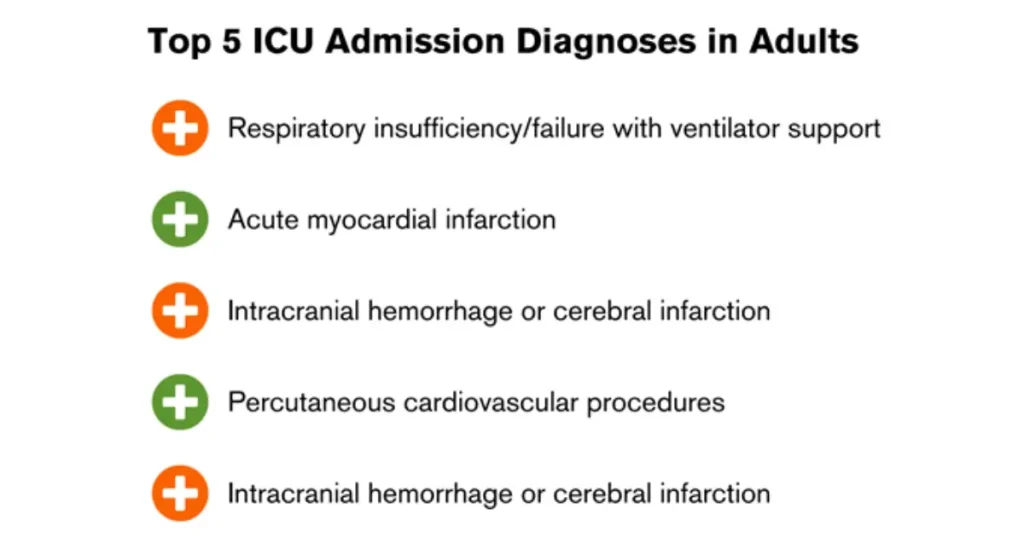
Source: Society of Critical Care Medicine
Body Composition in Critical Care: Adults
Monitoring multiple components of body composition measured by bioelectrical impedance (BIA) has been associated with the health status of patients in the ICU. Chia Cheng Tseng et al. (2024) found that ratio of total body water and fat free mass, “was the most reliable predictive parameter of in-hospital mortality,” in a study looking at dynamic changes in body composition during the first 8 days of ICU admission. In another study on renal patients by Ruste et al. (2023), “BIA variables (total body water, intracellular water, and extracellular water) were significantly correlated with cumulative fluid balance… in critically ill patients with fluid overload.” Following up critical patients after they are discharged is also very important. A one-year follow up on ICU patients by Hssain et al. (2023) observed that, “BIA to assess fat free mass index, hand grip muscular strength, and albuminemia at the end of ICU stay could be used to predict 1-year mortality.”

Pediatric Intensive Care: Phase Angle & Malnutrition Risk
BIA can also serve as a useful tool to track positive outcomes with CVD treatment. Mirman et al (2020) conducted a cardiac rehabilitation program with over 700 patients with coronary artery disease and found that body fat and visceral fat, measured with BIA, decreased along with blood pressure and cholesterol levels from participating in the rehabilitation program. Yang et al (2024) had similar findings, whereby patients with coronary heart disease had higher trunk fat mass and lower trunk muscle mass than healthy individuals. These body composition variables in this study were also related to peak oxygen uptake, a measure of aerobic fitness which was shown to be reduced in coronary heart disease patients.
As we continue to fight against heart disease, it’s important to highlight all the ways that body composition measurements can support researchers and clinicians with improving CVD patient outcomes. For more information on kidney disease and related topics, subscribe to our newsletter and connect with our medical & research team today.

References
- Critical care statistics. Society of Critical Care Medicine (SCCM). (n.d.). https://sccm.org/communications/critical-care-statistics#:~:text=More%20than%205%20million%20patients,exacerbations%20of%20complex%20chronic%20conditions.
- Killien, E. Y., Keller, M. R., Watson, R. S., & Hartman, M. E. (2023). Epidemiology of intensive care admissions for children in the US from 2001 to 2019. JAMA pediatrics, 177(5), 506-515.
- Kim, Y., & Cazaban, C. G. (2019, June). Trends in Neonatal Intensive Care Unit Admissions By Race/Ethnicity. In 2019 Annual Research Meeting. AcademyHealth.
- Tseng, C. C., Hung, K. Y., Chang, H. C., Huang, K. T., Wang, C. C., Chen, Y. M., … & Fang, W. F. (2024). The importance of high total body water/fat free mass ratio and serial changes in body composition for predicting hospital mortality in patients with severe pneumonia: a prospective cohort study. BMC Pulmonary Medicine, 24(1), 470.
- Ruste, M., Chabanol, C., Fellahi, J. L., & Jacquet-Lagrèze, M. (2023). Bioelectrical impedance analysis during deresuscitation: correlation and agreement with cumulative fluid balance in ICU patients. Journal of Clinical Monitoring and Computing, 37(2), 679-687.
- Hssain, A. A., Farigon, N., Merdji, H., Guelon, D., Bohé, J., Cayot, S., … & Dupuis, C. (2023). Body composition and muscle strength at the end of ICU stay are associated with 1-year mortality, a prospective multicenter observational study. Clinical Nutrition, 42(10), 2070-2079.
- Yang, J., Zhang, J., Liu, J., Liu, G., & Qian, S. (2024). Bioelectrical impedance phase angle and the mortality in critically ill children. Frontiers in Nutrition, 11, 1359814.
- Albadi, M. S., & Bookari, K. (2022). Is undernutrition associated with deterioration of outcomes in the Pediatric Intensive Care Unit (PICU): Systematic and meta-analysis review. Frontiers in Pediatrics, 10, 769401.
- Gallo, N., Horvath, K., Czuppon, K., Tomsits, E., Felegyhazi, E., & Kovacs, G. T. (2021). Different nutritional screening tools and recommended screening algorithm for pediatric oncology patients. Clinical nutrition, 40(6), 3836-3841.


