
The integrity of our cells is critically important to maintain our health status. Bio-electrical impedance (BIA) can quickly and effectively offer insight into our cellular phase angle (PhA), which is a relevant measure of cell membrane health. In this week’s newsletter, Clinical Research Associate Joseph Bonner will discuss what PhA is and why this may be an important factor for assessing health.
What is Phase Angle?
Before explaining what PhA is, it’s necessary to understand how BIA is related to our cells in the first place. BIA measures body fluid and body composition by sending weak electrical currents throughout the body. Our body fluid contains charged particles (i.e. sodium, potassium, calcium) that enable these electrical currents to be conducted.
BIA & Resistance
Additionally, there is physiological resistance associated with how these electrical signals travel. Having a high amount of resistance means it is more difficult to conduct an electrical signal. In the context of body fluid, this would mean having lower amounts of fluid. Higher amounts of body fluid typically means that there is less resistance, and it is easier to conduct electrical signals. Higher body fluid may also be related to having more lean body mass, inflammation, or fluid retention (i.e. edema).
Cell Membrane
As these electrical signals travel, they encounter all the cells that make up our bodily tissues (i.e. our organs, muscles, bones, skin). Cells have a robust membrane, called the phospholipid bilayer, that protects their inner compartments from unwanted molecules, electrical signals, and foreign entities from entering.
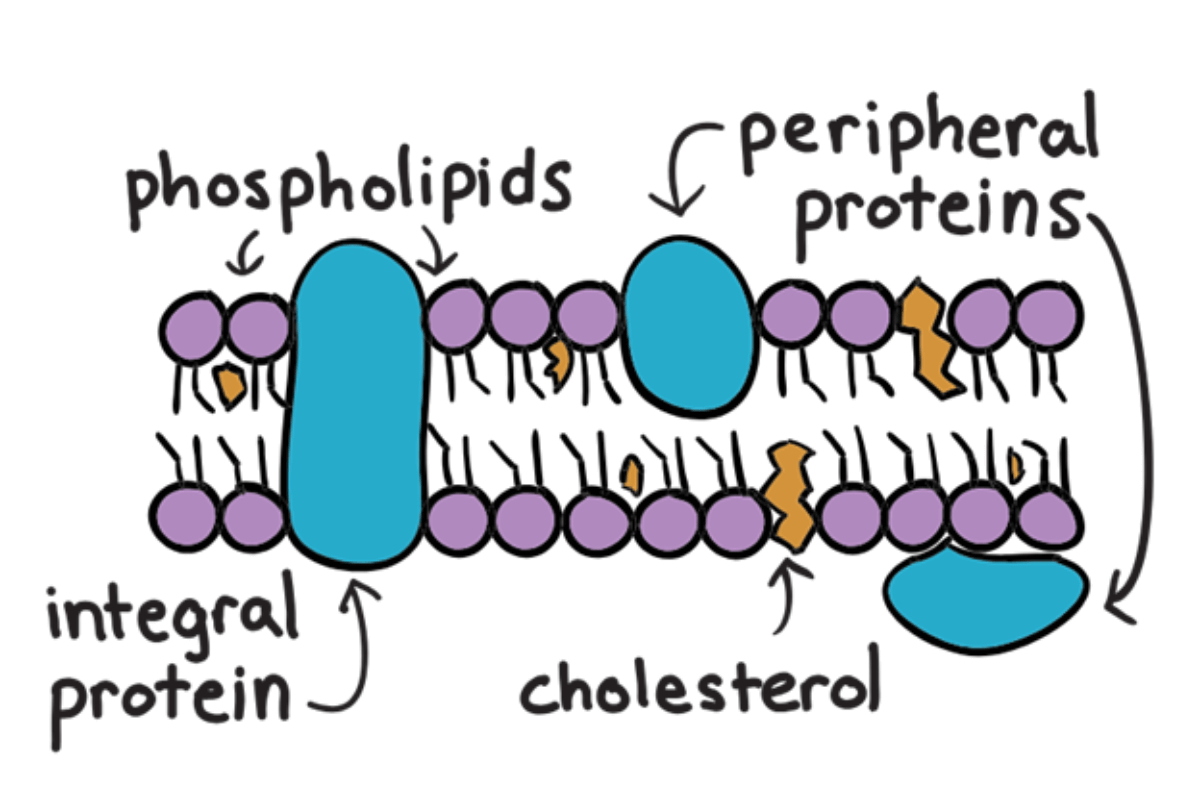
Phospholipid Bilayer of Cell Membrane Source: Khan Academy
The strength and resiliency of the cell membrane is very important regarding the overall health of a cell. A weak cell membrane is more likely to be susceptible to penetration by unwarranted phenomenon and not function as well. Cells also can store energy, and this is called reactance. BIA technically measures body impedance, which is simply the sum of resistance and reactance. Phase angle (PhA) refers to the ratio of the resistance to reactance, measured in degrees.

PhA of an individual with chronic disease (A) versus healthy individual (B) Source: Aburto-Corona, J. et al, (2024).
Why is PhA important?
As an indicator of cellular health, PhA has been used in clinical care and research to track health status and patient outcomes in several therapeutic areas.
In pediatrics, Yang et al (2024) found that “Low PhA in patients is associated with longer PICU LOS and an increased risk of PICU patient mortality. PhA not only serves as an indicator for monitoring pediatric nutrition but also as a prognostic indicator for PICU patients.”
Regarding cardiovascular health, Yokomachi et al (2023) observed that “Phase angle is a good marker of muscle wasting and malnutrition in patients with cardiovascular disease, including chronic heart failure.”
For nephrology, Shin et al (2022) concluded that “PhA appears to be a reliable marker for estimating muscle health and HRQoL in patients with CKD.”
These studies are a few examples of how PhA has been clinically applied to specific patient populations and used as a health marker by health professionals. As more studies are conducted using phA , we hope that its associations with cell membrane health can continue to inform researchers and clinical experts in their care.
For more information on critical care and related topics, subscribe to our newsletter and connect with our medical & research team today!
References
- Cole KS. ELECTRIC PHASE ANGLE OF CELL MEMBRANES. J Gen Physiol. 1932 Jul 20;15(6):641-9. doi: 10.1085/jgp.15.6.641. PMID: 19872673; PMCID: PMC2141191.
- Aburto-Corona, J. A., Calleja-Núñez, J. J., Moncada-Jiménez, J., & de Paz, J. A. (2024). The effect of passive dehydration on phase angle and body composition: A bioelectrical impedance analysis. Nutrients, 16(14), 2202.
- Yang, J., Zhang, J., Liu, J., Liu, G., & Qian, S. (2024). Bioelectrical impedance phase angle and the mortality in critically ill children. Frontiers in Nutrition, 11, 1359814.
- Yokomachi, J., Fukuda, T., Mizushima, Y., Ishizaka, H., Matsumoto, K., Kambe, T., … & Nakajima, T. (2023). Clinical usefulness of phase angle as an indicator of muscle wasting and malnutrition in inpatients with cardiovascular diseases. Asia Pacific Journal of Clinical Nutrition, 32(3), 297.
- Shin, J., Hwang, J. H., Han, M., Cha, R. H., Kang, S. H., An, W. S., … & Kim, S. H. (2022). Phase angle as a marker for muscle health and quality of life in patients with chronic kidney disease. Clinical Nutrition, 41(8), 1651-1659.


