
Monitoring skeletal muscle mass and mitigating the risk of malnutrition is important for patients in multiple therapeutic areas. Additionally, key fluid variables such as intracellular water, extracellular water, and total body water can offer insight into water retention and possible inflammation. In this week’s newsletter, Clinical Research Associate Joseph Bonner will explore how monitoring skeletal muscle mass and fluid status can be of vital clinical significance.
Skeletal Muscle Mass
Skeletal muscle mass (SMM) is a primary component of the musculoskeletal system that regulates voluntary bodily movement. Major muscle groups are attached to bones and mainly contract by receiving inputs from the nervous system. Having healthy amounts of skeletal muscle mass is associated with “improved health, independence and functionality” (Mcleod et al, 2016). There are multiple ways to measure SMM, however the use of bioelectrical impedance (BIA) has been noted as providing “valid estimates of SM mass in healthy adults varying in age and adiposity” (Janssen et al, 2000).
SMM decreases as we age, and this decline can also be impacted by changes in lifestyle habits, nutrition, and certain chronic diseases.
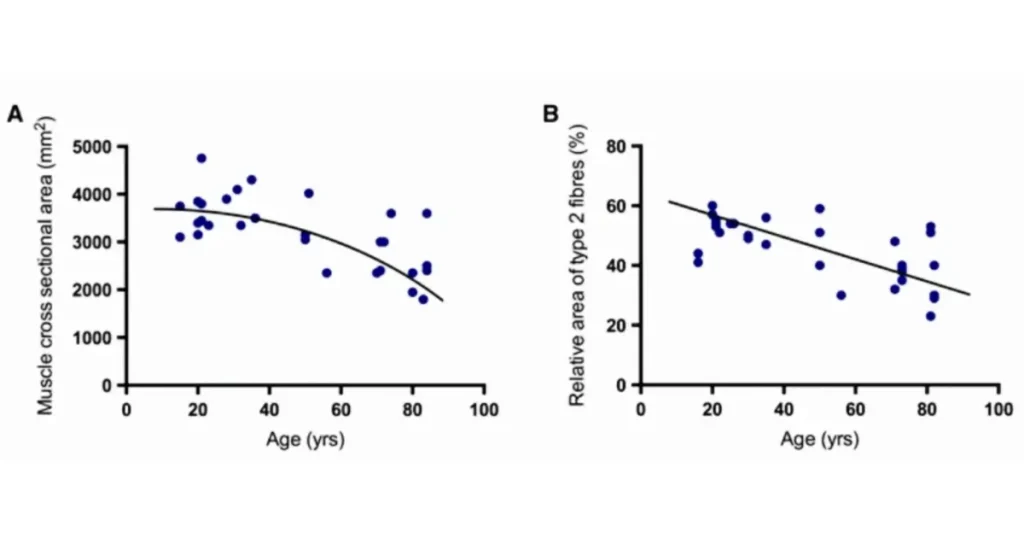
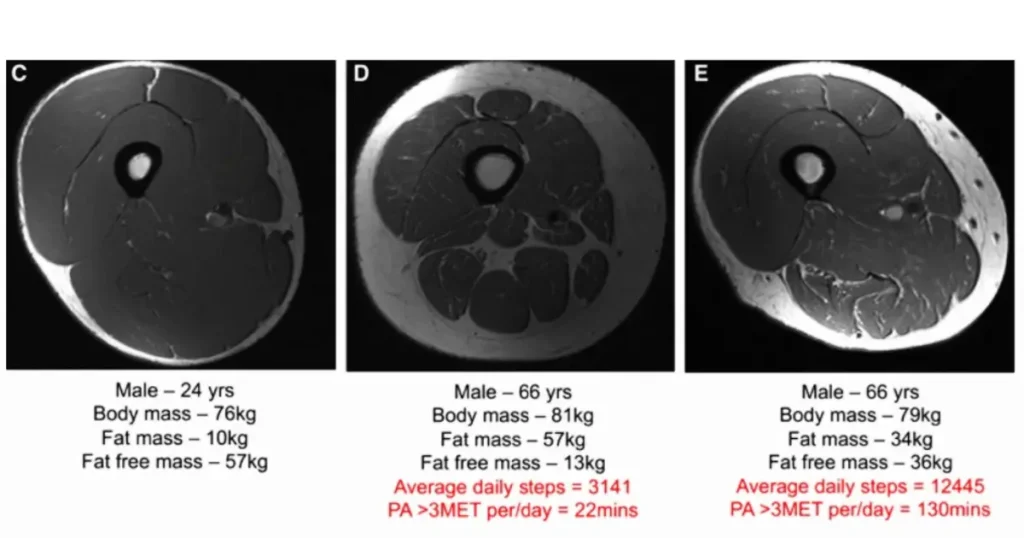
Loss of skeletal muscle size and quality occurs during healthy ageing, Source: Mcleod et al, 2016
Risk of Malnutrition
Cachexia and sarcopenia are two significant conditions that can exacerbate SMM loss.
The United States National Cancer Institute defines cachexia as “A condition marked by a loss of more than 10% of body weight, including loss of muscle mass and fat, in a person who is not trying to lose weight.” Severe cases of cancer may induce cachexia, and it is an extreme form of malnutrition that can impact patient status and quality of life. Mueller et al (2020) assessed body composition in cancer patients with malnutrition and found that, “45.7% of the cohort were classified as “malnourished.” Regarding patient outcomes, Ohara et al (2024) analyzed body composition and survivability in gastroenterology cancer patients, noting that “The cumulative one‑year overall survival (OS) rate was significantly worse in the low‑CXI group compared with that in the high‑CXI group.”
“A high edema inde“The results suggest that BIA (bioelectrical impedance) is a valid diagnostic tool for the assessment of muscle and fat mass, even in patients with malnutrition, and could be implemented for the early detection and short-term follow-up of malnutrition and cachexia.” (Muller et al, 2020).x is associated with the incidence of cardiovascular disease. Overhydration should be especially avoided in recipients with these factors, and their fluid volume should be carefully managed” (4).
Skeletal Muscle Mass & Fluid Status
Declines in SMM can also be associated with inflammation and increased water retention. For example, a segmental lean analysis from BIA can indicate the amount of lean body mass (LBM) in each of the limbs and quantify the ratio of extracellular water to total body water (ECW/TBW). Normal values for ECW/TBW typically range between 0.36-0.399. When ECW/TBW is elevated, it may indicate edema and localized water retention. In the example results sheet provided below, notice how the LBM values for the legs are significantly lower than the arms and trunk. Additionally, the ECW/TBW ratio is elevated, which can indicate edema and inflammation. This may also be associated with low LBM and can overestimate LBM if this key fluid indicator is not factored into clinical interpretations.

Example of low LBM & high ECW/TBW Source: InBodyBWA
Conditions that are associated with inflammation can impact the fluid status of patients. Zhao et al (2022) monitored fluid status in lung cancer patients, finding that “Greater Intracellular water and extracellular, especially intracellular water, were independent predictors for better survival in patients with lung cancer.” In patients that also had sarcopenia, Ge et al (2022) conducted a multi-center study on fluid predictors of all-cause mortality in cancer patients. They concluded that “Extracellular water / Total Body Water was better than other indicators in predicting survival of cancer patients with sarcopenia.”
In summary, these studies highlight the importance of tracking SMM and fluid status in vulnerable populations. For more information on SMM, fluid status, oncology and related topics, subscribe to our newsletter and connect with our medical & research team today.
References
- Professional, C. C. medical. (2025, March 19). Skeletal muscle: What is it, function, Location & Anatomy. Cleveland Clinic. https://my.clevelandclinic.org/health/body/21787-skeletal-muscle
- McLeod, M., Breen, L., Hamilton, D.L. et al. Live strong and prosper: the importance of skeletal muscle strength for healthy ageing. Biogerontology 17, 497–510 (2016). https://doi.org/10.1007/s10522-015-9631-7
- Janssen, I., Heymsfield, S. B., Baumgartner, R. N., & Ross, R. (2000). Estimation of skeletal muscle mass by bioelectrical impedance analysis. Journal of applied physiology, 89(2), 465-471.
- Thomas, D. R. (2007). Loss of skeletal muscle mass in aging: examining the relationship of starvation, sarcopenia and cachexia. Clinical nutrition, 26(4), 389-399.
- NCI Dictionary of Cancer terms. Comprehensive Cancer Information – NCI. (n.d.). https://www.cancer.gov/publications/dictionaries/cancer-terms/def/cachexia
- Mueller, T. C., Reik, L., Prokopchuk, O., Friess, H., & Martignoni, M. E. (2020). Measurement of body mass by bioelectrical impedance analysis and computed tomography in cancer patients with malnutrition–a cross-sectional observational study. Medicine, 99(50), e23642.
- Ohara, T., Iwai, N., Oka, K., Okabe, K., Sakai, H., Tsuji, T., … & Itoh, Y. (2024). Clinical significance of cachexia index determined by bioelectrical impedance analysis in patients with gastrointestinal cancer. Oncology Letters, 29(3), 114.
- Zhao, W., Zhang, Q., Yang, Z., Rao, B., Chen, Y., Yu, K., … & Shi, H. (2022). Association of differential body water composition by sex, measured using BIA, with survival in a real‑world lung cancer cohort. Nutrition, 103, 111804.
- Ge, YZ., Ruan, GT., Zhang, Q. et al. Extracellular water to total body water ratio predicts survival in cancer patients with sarcopenia: a multi-center cohort study. Nutr Metab (Lond) 19, 34 (2022). https://doi.org/10.1186/s12986-022-00667-3


